
Why your neck and shoulder tightness keeps coming back
Why your neck and shoulder tightness keeps coming back (and what your breathing has to do with it)
You have a massage. Your neck and shoulders finally drop. By Thursday they're back up near your ears, and you're wondering if you'll need to book in every week for the rest of your life.
I hear some version of this most weeks. After 13 years of treating people who are managing a lot, I've stopped putting neck and shoulder tightness down to bad luck or bad posture. When it keeps coming back, it usually means those muscles are doing a job that isn't theirs. Very often, that job is breathing.
What I saw at the open day
At a recent gym open day, I ran a group breathwork session. Before we started, I asked everyone to put one hand on their chest and one on their belly, and take one normal breath. Not a big deep one. Just the breath they'd been taking all morning.
Eight out of ten breathed into their chest first.
These weren't unfit people. They train, they work, and most of them have kids. That's the point. Busy days pull your breath up into your chest, and plenty of people who look after themselves well breathe this way without ever noticing.
What your diaphragm is meant to be doing
Your diaphragm is a dome-shaped muscle that sits under your ribs. When you breathe in, it moves down, and your lower ribs widen out to the sides and into your back. Your belly moves a little because everything underneath gets nudged out of the way. It's the main engine for breathing, and it's built to run all day without you thinking about it.
When you're rushed, busy or switched on for hours, your breath tends to move higher. The diaphragm does less, and the muscles around your neck and the tops of your shoulders start lifting your ribs instead.
Those muscles are allowed to help. They're meant to step in when you're running up a hill. They're not meant to do it on every breath, through every meeting and every drive home. You take somewhere around 20,000 breaths a day. If your neck is helping with even half of them, it's working a second job.
Why a massage on its own doesn't hold
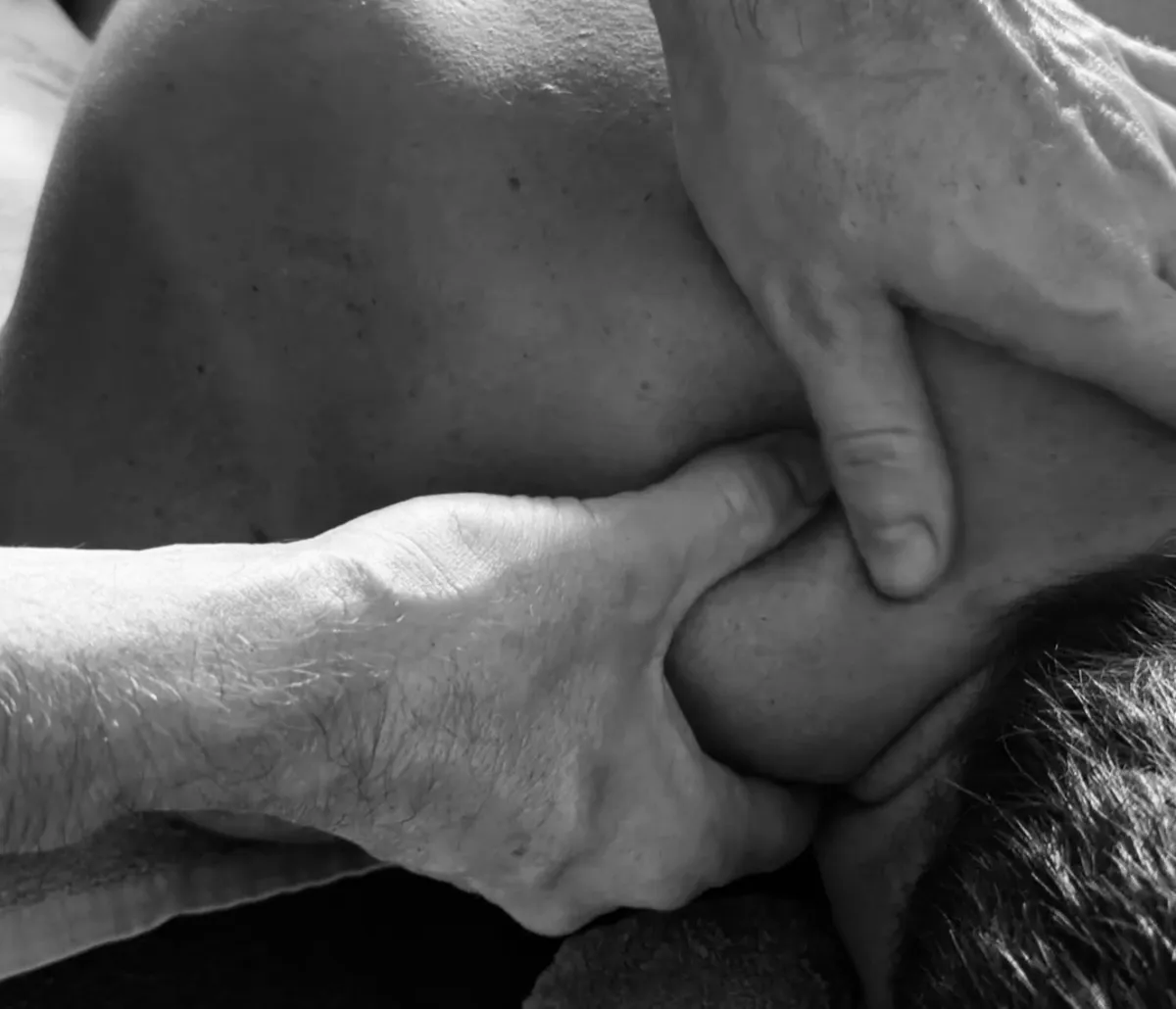
When I work on upper traps like this, they're rarely just tight. They feel worked, like they've been busy all day.
Massage eases that, and it's a real part of the fix. But when you walk out the door and breathe the way you always do, the job is still waiting. The muscles pick it straight back up, and a few days later the tightness is back. Stretching works the same way. It feels good for an hour, and then the job comes back.
So in a session I'm not only asking where it's tight. I'm asking what it's covering for.
Try the test yourself
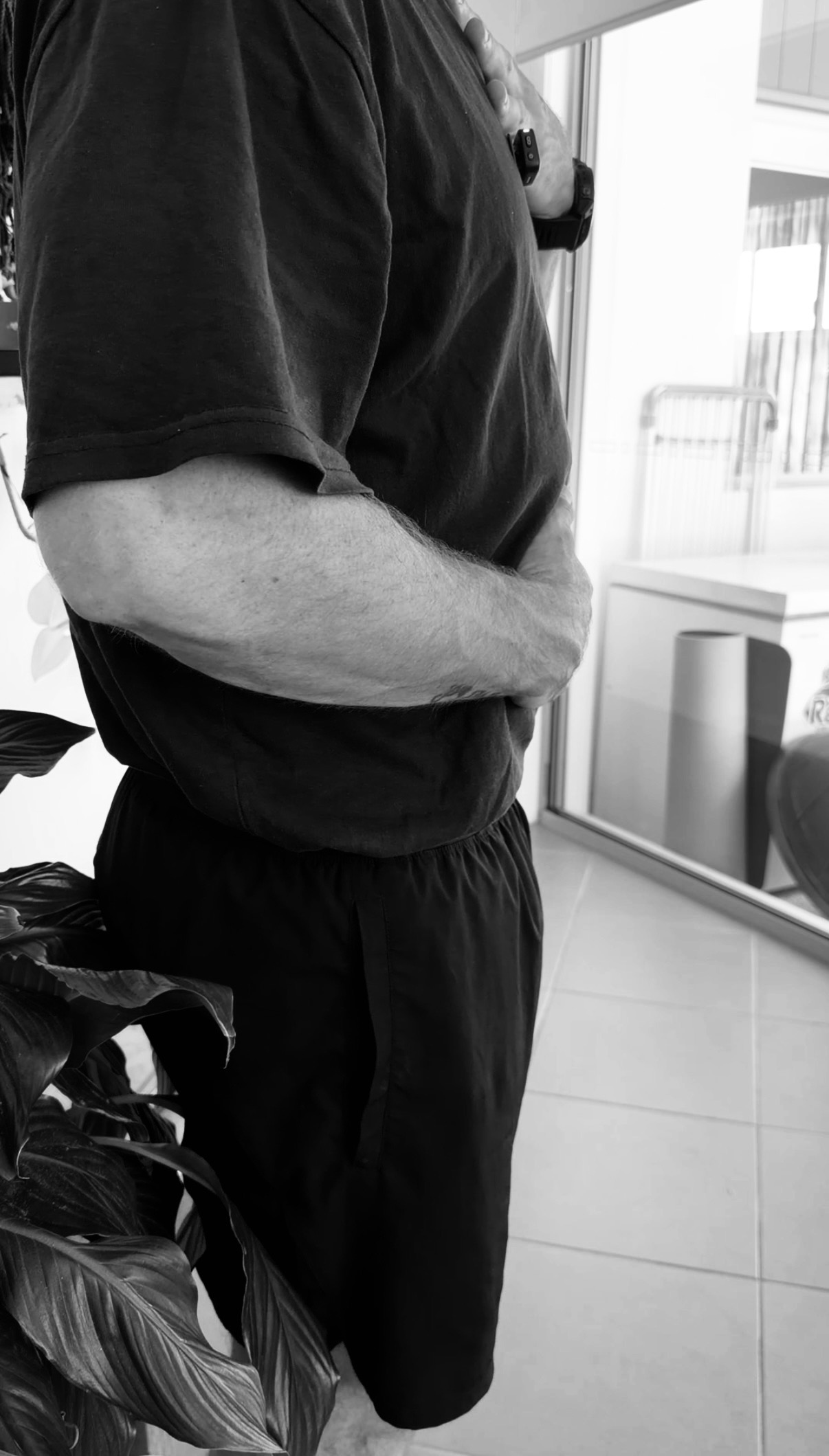
Sit the way you usually sit at work or in the car. Put one hand on your chest and one on your belly. Breathe in through your nose, the way you normally would. Don't try to get it right; just notice which hand moves first.
Belly first: your diaphragm is leading. That's the job it's built for.
Chest first: your neck and shoulders are helping lift your ribs, on every breath.
Both at once: common in people who train hard, and worth a closer look.
Whatever you found, it's a habit, not a fault. Habits can be retrained, and it doesn't take long each day.
The 2-minute rib reset
I do this in the car between clients. It's the same reset I give most people with this pattern.
Put your hands on your lower ribs, one on each side. Breathe in through your nose and feel your ribs widen into your hands, sideways and into your back, not up towards your ears. Then breathe out slowly, a little longer than the in-breath.
Do ten of those, once or twice a day. Two minutes in the car before you walk inside is a good time. So is lying in bed before you sleep.
If ten feels like a lot, start with five. You're not aiming for perfect. You're reminding your diaphragm it has a job, so your shoulders can stop doing it. If any breathing exercise makes you feel dizzy or uncomfortable, stop and go back to breathing normally.
When home practice is enough, and when it isn't
If your tightness is mild and comes and goes, the reset might be all you need. Give it two weeks and see what your shoulders tell you on a Friday afternoon.
Hands-on help makes sense when the tightness has been building for months, when the muscles still feel locked on after the reset, or when one side is much worse than the other. It also makes sense if you've already tried stretching and the odd massage, and it keeps coming back.
If you have numbness, tingling or pain running down your arm, or the tightness started after a fall or an accident, see your GP or physio first.
What a session looks like
I'm a mobile remedial massage therapist, so I come to you, at home or at work. I cover the Sunshine Coast from Noosa down to Kawana, including Peregian and Coolum.
We start with a quick chat about your week, because work, training and family all show up in your body. Then I release what's overloaded with remedial massage, with dry needling included when it helps. Before I pack up, we work on your breathing pattern so the tension has less reason to come back, and you leave with a reset that fits into your day.
Remedial massage can be claimed with Bupa, nib, Australian Unity, Doctors' Health Fund and CBHS, depending on your cover. I email you a receipt after the session to claim with your fund.
I'll ease it on the table. What you do between sessions decides whether it comes back. If yours keeps coming back, that's what a session is for.